What does Walgreens look like in 25 years?
From bold predictions to surprising ideas, team members imagine Walgreens’ future in vivid detail.

Team members share bold, human and sometimes unexpected visions of how Walgreens could shape the future of retail pharmacy.
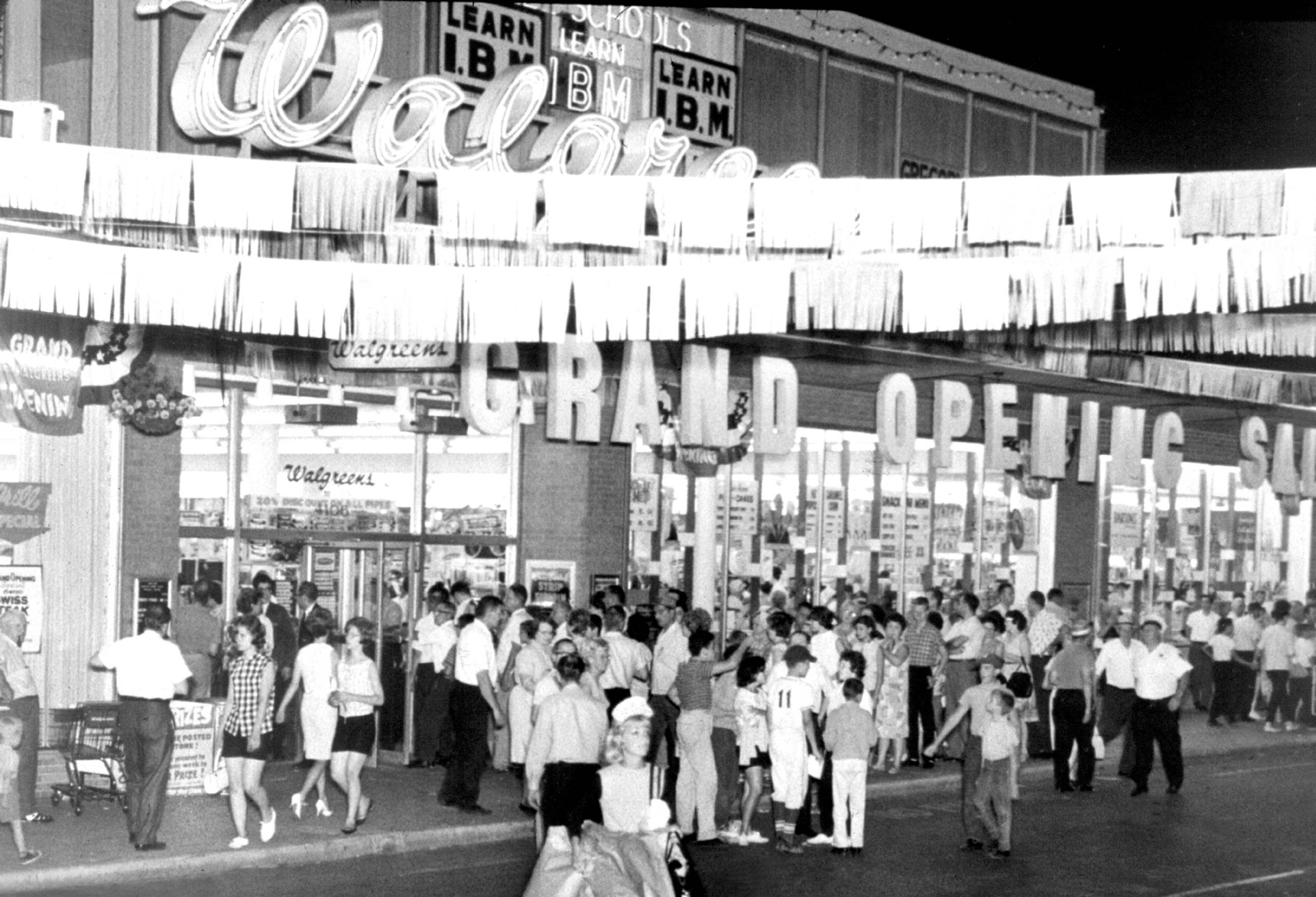
For more than a century, Walgreens hasn’t just responded to change—we’ve imagined it. Long before pharmacy drive-thrus became a convenience customers expect, Walgreens leaders predicted their potential. Although the first drive-thru pharmacy opened in 1951, the idea didn’t take off nationwide until Walgreens opened its first drive-thru location in 1990. Within a decade, drive-thrus were standard at most of our stores.
That habit of imagination—looking ahead before the world catches up—has always been part of who we are. So we asked today’s team members to do the same: Imagine Walgreens 25 years from now.
From artificial intelligence and automation to community, inclusion and even care beyond Earth, here’s how our team members envision the Walgreens of tomorrow.
Any forward-looking statements, forecasts or opinions expressed by team members are their own and should not be interpreted as official company views, commitments or indications of Walgreens’ future plans or strategies.

Walgreens as a proactive, connected health ecosystem
“As you walk into Walgreens in 2051, the store already knows you. Sensors at the entrance quietly scan vital signs and sync with your lifelong health profile. Shelves light up, guiding you to what your body needs, while irrelevant options fade away. An automated shopping cart moves alongside you, acting as both personal shopper and health guide.
“Prescriptions no longer react to symptoms-they adapt in real time, designed to prevent issues before they appear. Aging itself feels softer, personalized through predictive health modeling and precision care. Checkout happens automatically as you leave.
“This Walgreens isn’t a place you visit when you’re sick. It’s a place you come to stay optimized, where healthcare finally walks beside you, one step ahead.”
Scott Newman, director of Asset Protection Operations at the support center in Deerfield, IL
“I picture a future where Walgreens becomes a fully connected health hub powered by advanced science and technology. Diagnosing common conditions will be quick, accurate and accessible. Every store includes drone delivery hubs, with medications and essentials arriving within minutes.
“Most importantly, this level of innovation would be available to all communities. Walgreens could lead the way in making healthcare faster, smarter and more equitable for future generations.”
Juli Warren, senior IT recruiter at the support center in Deerfield, IL
“In 25 years, stores will use AI, robotics and real-time health data to deliver personalized care for every patient. Prescriptions will be custom compounded on demand, autonomous delivery will bring medications within minutes and virtual pharmacists will be available 24/7 through augmented reality or holographic consultations. Walgreens won’t just be a pharmacy. It will proactively monitor, predict and help prevent health issues, while staying rooted in the community.”
Shomaila Liaqat, store manager at 14202 in New York, NY
Automation, kiosks and frictionless access
“In 25 years, picking up prescriptions, getting a vaccine and leaving with snacks you didn’t plan on buying will be seamless. The pharmacy will run like a pit crew: robots pre-sort medications in the back while humans handle the edge cases. Curbside becomes the default-you’ll order from your car, smartwatch or fridge, and a locker pod rolls out like a vending machine on wheels.
“The wellness bar replaces the waiting room: blood pressure, A1C checks, strep tests and telehealth booths. There will still be a real clinician on site because even in 2051, insurance claims require a human sacrifice. Rewards get absurdly personalized, receipts get shorter and the app reminds you to drink water and call your mom.”
Matt Ville, emerging store manager at 3063 in Fort Lauderdale, FL
“Customers would receive prescriptions using facial recognition or a device linked to their account—the same system used for store purchases.”

Matt Ville
Emerging store manager, Sunrise, Florida
“Walgreens could evolve into a mostly virtual experience built around individual kiosks with AI pharmacists available for consultation. Customers would receive prescriptions using facial recognition or a device linked to their account—the same system used for store purchases. Products would no longer be opened, sampled, eaten or used before purchase. Instead, items would be paid for first and then dispensed by robotic systems at a separate pickup point.”
Donald Blackburn, shift lead at 7018 in Phoenix, AZ
“I’d like to see Walgreens move toward a vending machine or locker experience for prescription pickup. Customers could complete ID verification and retrieve their medications without waiting in line. Voice-recorded pharmacist guidance would be available in the app, letting patients replay instructions whenever they need them. This approach offers advice on demand, reduces bottlenecks, and improves both customer experience and operational efficiency.”
Daya Kadam, senior systems engineer at the support center in Deerfield, IL
Smarter systems and clinical integration
“Twenty-five years from now, Walgreens will be fully integrated with local clinics and hospitals. Shared access to diagnoses and clinical history will improve care for complex patients and eliminate delays. Prescriptions from ERs will route automatically to open, appropriately staffed locations.
“Direct messaging with prescribers about shortages and clinical concerns will reduce backlogs and improve patient experience. Integration with Epic and similar EHR systems will make care faster, smarter and more connected.”
Hannah Navarre, pharmacist at 13012 in Manassas, VA
“Walgreens locations may become digitally secured environments accessed through app-based ID verification. Smart entrances would guide customers to pickup, drive-thru or in-store shopping.
“AI and geolocation would direct shoppers to items, while photo-verified compliance checks streamline operations. Technology improves security, efficiency and customer navigation without sacrificing support.”
Justin Rider, store manager at 11674 in St. George, UT
Community, culture and inclusion
“I imagine a Walgreens that is a proud destination for the disabled community—where our needs are centered, not hidden. Mobility aids would be colorful and customizable. Clothing would be adaptive, inclusive of people using wheelchairs, medical devices, compression wear and gender-affirming apparel.
“Food offerings would align with real health needs, from whole foods and gluten-free options to electrolytes for autoimmune conditions and diabetic-friendly snacks that reduce stigma. Walgreens could offer storage solutions for medical devices, attractive medical alerts people actually want to wear and even shopping bags designed with secure prescription pockets. For those newly diagnosed, educational resources would be readily available.
“People with disabilities are among Walgreens’ most consistent customers, regularly visiting for prescriptions and supplies. Disability is the one community anyone can join at any time. In 25 years, I hope Walgreens is known as a champion for disability inclusion and pride, creating a space that truly serves the people who rely on it most.”
Dana Becker, senior tax analyst at the support center in Deerfield, IL
“If someone from 2026 walked into a Walgreens in 2051, it would feel familiar in purpose but entirely different in spirit. Walgreens is no longer a place you visit when something goes wrong—it’s a place you return to stay well.
“Mobility is the first shift. Electric mobility chairs become everyday transportation, not medical devices-quiet, elegant and dignified. Walgreens helps lead that change, treating mobility as an extension of independence, not limitation.
Wellness became premium not in price, but in care. People learn to tune their health before it breaks, not repair it afterward.
Sally Cheung
Buying Manager
“Medicine softens, too. Western pharmaceuticals now exist alongside traditional and plant-based remedies. Fewer supplements, fewer promises, only what is intentional and effective. Wellness became premium not in price, but in care. People learn to tune their health before it breaks, not repair it afterward.
“What stands out most is the space itself. Stores feel warm and calm, designed to slow time just enough. As Walgreens became a place of care rather than consumption, theft declines and the community grows.
“Walgreens is no longer just a store. It’s a place to reset. Because health was never only about medicine, it was always about how people move, gather and feel safe being human.”
Sally Cheung, buying manager in Global Sourcing

The evolving role of pharmacists and team members
“I imagine Walgreens pharmacies operating more like doctor’s offices. Pharmacists would meet with each patient to review medications they’re taking and not taking, recommend vaccines, conduct pill counts and provide ongoing care, not just transaction-based service.”
Julie Stark, pharmacy manager at 19333 in Sidney, NY
“In the future, most Walgreens locations operate primarily through drive-thru or curbside service. Staff or robots would pick orders with no hands-on shopping, and stores would function as mini warehouses rather than traditional aisles. Prescriptions would be drive-thru only, with pharmacists focusing on patient interactions while AI and robotics support technical tasks.”
Eric Hoefer, emerging store manager at 11730 in Cortland, OH
“Walgreens’ future front end will be personalized and interactive. Customers and team members could recommend inventory changes, pitch product ideas and participate in brand collaborations driven by cultural trends. These tools would live on the app and website, helping Walgreens stay relevant to every generation.”
Aryan Saha, customer service associate at 11786 in Irvine, CA
Beyond the store
“Over the next 25 years, Walgreens could help redefine healthcare for a multi-planet future. As humans begin living and working beyond Earth, Walgreens is uniquely positioned to bring trusted pharmacy care wherever people explore.
“By combining pharmacy expertise with advanced logistics, AI-driven digital health and autonomous systems, Walgreens could support space missions with medication delivery, diagnostics and self-contained health pods aboard commercial space platforms.
“This vision transforms Walgreens from a neighborhood cornerstone into a guardian of human health on the next frontier-providing care without planetary limits, on Earth and beyond.”
Soulat Umer, director of software engineering at the support center in Deerfield, IL

“I see Walgreens showing up in unexpected places—from digital kiosks on planes, trains and in airports that give travelers access to medications and essentials, to partnerships that help close care gaps by honoring plant-based remedies and Indigenous knowledge in underserved communities. At the same time, Walgreens invests in the future workforce by identifying STEM students early, offering pharmacy tech roles as first jobs and developing the pharmacists of tomorrow who solve problems we haven’t even imagined yet, maybe even at NASA.”
Chrissy Green, senior pharmacy technician at 15304 in Atlanta, GA

Ahead of their time
For decades, Walgreens team members have shared their visions of what the future might hold. Some predictions missed the mark. Others were surprisingly accurate. A few turned out to be well ahead of their time.
Looking back, those ideas feel less like guesses and more like early signals of where retail pharmacy was headed:
In the 1960s, predictions about the year 2000 imagined airborne vehicles, automated grocery and department stores, and widespread use of robots and machines. While flying cars are still elusive, automation is very much part of our reality. Today, robots power our micro-fulfillment centers, helping fill prescriptions and freeing up pharmacy team members to focus on patient interaction and clinical services.
In 1979, then-company president Fred Canning told shareholders, “We can envision new dimensions in healthcare services—sickroom supplies, hearing aids, health testing equipment.” Nearly 40 years later, Walgreens began offering hearing aids, turning that vision into reality.
In 1994, a Walgreens executive predicted that by 2010, “Desktop computers will be ancient history. Computing power will travel with each of us. You won’t be able to tell the difference between a telephone and a computer.” Just 13 years later, the first iPhone was released—forever changing how people communicate, work and access information.
Twenty-five years from now, some of these ideas may feel ambitious. Others may feel inevitable. A few may surprise us. But history reminds us that many of Walgreens’ most important innovations began as someone imagining what could be.
Stay in the know
Stay connected with the latest updates and the latest news from Walgreens delivered straight to your inbox.